Author

justine

Blog, Spring Food

Ta-no-Kami (田の神) The god of the rice fields


Ta-no-Kami (田の神) the god of the rice fields.

On March 16th in the rural farming areas  of Japan just before the spring equinox, according to Shinto belief the rice deity comes down from the mountains once more after their hibernation over winter to protect the rice paddy fields.

This deity is called Ta-no-Kami  田の神 .

Ta-no-Kami (田の神) is a kami (spirit) who is believed to observe the harvest of rice plants or to bring a good harvest. Ta in Japanese means “rice fields”.

In this unusual blog post I discuss why 16 rice balls are eaten at this time and the origins of a dance which turned into a food we now enjoy on a skewer.

This celebration is a folk calendar observance rather than a formal Shinto festival. That’s why you’ll see several closely related names depending on region.

The most common name is Ta-no-Kami Matsuri (田の神祭り)

This is the most widely used descriptive name for March 16 literally meaning “Festival of the Rice Field Deity.” It refers specifically to welcoming Ta-no-Kami into the fields. In villages, people often did not think of it as a “festival” in the modern sense, but later matsuri was applied as a convenient label.

Because the key idea is descent from the mountains, some regional names focus on that moment, Ta-no-Kami oroshi (田の神降ろし) “the descent of the field god” highlighting the crossing from mountain to field. Kami-mukae (神迎え)”welcoming the deity”a very old ritual term also used for other seasonal spirit arrivals.These names emphasise hospitality toward the kami, rather than celebration. In premodern contexts, the day might be described more formally as Sangatsu jūrokunichi (三月十六日) “The sixteenth day of the third month” This sounds plain, but in agrarian life it functioned as a fixed sacred marker, much like “Obon” does later in the year.

It is actually significant that there is no single  name as Ta-no-Kami belief predates centralized Shinto. It belongs to local, household based religion where such observances were  transmitted by word of mouth and varied from village to village. So the function of the day mattered more than its title.

As mentioned before it is custom to eat sixteen rice balls on this day so the day can also be referred to simply as Jūroku-dango (十六団子) “The sixteen dumplings.” In practice, people might say “today is jūroku-dango.” This is especially common in Tohoku and eastern Japan, where food based naming of ritual days is frequent.

Ta-no-Kami literally means “the deity of the rice paddies.” Rather than a single, fixed god, Ta-no-Kami is best understood as a seasonally moving spirit connected to rice cultivation, ancestors, and the landscape.

In many regional traditions, Ta-no-Kami has two identities depending on the time of year. Yama-no-Kami (山の神) the mountain god, dwelling in the hills during winter. Ta-no-Kami (田の神) the rice field god, descending to the paddies in spring. This reflects an older belief that mountains are the realm of ancestral spirits and they descend to protect and energize the fields during planting season then after the harvest, they return to the mountains once more. In this sense, Ta-no-Kami is often linked to ancestral spirits, not just agricultural fertility.

The 16th day of the 3rd lunar month (later mapped onto March 16 in many regions after calendar reforms) was widely regarded as the day when Ta-no-Kami descends from the mountains to the fields.

Meaning of this date marks the beginning of the agricultural year. Farmers ritually “welcomed” the deity to ensure healthy seedlings, protection from pests and flood and a bountiful harvest. This date appears repeatedly in folk calendars across Japan, though exact timing could vary by region and climate.

Practices differed locally, but common elements included,welcoming rites offering  rice, sake, vegetables, or mochi. Also setting up yorishiro (objects to invite the deity), such as branches, bamboo poles,straw decorations plus cleaning irrigation channels and paddies as a form of ritual purification. Shared meals helped bind the community and symbolically shared sustenance with the deity

The number 16 itself carries symbolic weight in Japanese folk religion. The 16th often marks a boundary day between sacred and ordinary time. For example. The 16th day of the 7th month is when ancestral spirits are believed to return to the other world after Obon. This reinforces the idea that March 16 is a threshold moment, when a deity crosses between realms (mountain to field). Even now, echoes of these beliefs persist.

Ta-no-Kami statues (often humorous or rustic) can be found in rural areas, especially in Kyushu and southern Japan. Short, squat bodies large or exaggerated heads, sometimes holding rice sheaves sake cups and farming tools. Occasionally smiling, laughing, or slightly grotesque or ancestral representation. Many scholars believe Ta-no-Kami statues are memorialised ancestors, not abstract gods. Their human like appearance reflects this, the rice deity and the ancestral spirit are effectively the same being. Grotesque or exaggerated features are common in  protective objects. They ward off disease, crop failure, and malevolent spirits.

Ta-no-Kami statues are often placed at the edge of rice fields, near irrigation channels and at village boundaries. These are spaces exactly where spiritual protection is thought to be most necessary.

Spring festivals still include welcoming  rites for field deities, ritual plowing or planting demonstrations, some communities continue to mark March 16 (or its local equivalent) as a special agricultural observance

When Japan adopted the Gregorian calendar in 1873, lunar dates like “the 16th day of the 3rd month” no longer aligned with seasons But agricultural timing is seasonal, not numerical. Villages responded in different ways to this, some fixed rituals to March 16 others shifted rites to a similar seasonal moment the nearest convenient festival day many continued rites quietly, without official recognition.

The custom of eating 16 rice balls (十六の団子・十六団子) on the 16th of the 3rd month is one of the clearest survivals of Ta-no-Kami belief.

On this day, households traditionally prepared 16 small rice balls or dumplings and offered them to Ta-no-Kami, after which they were eaten by the family or community.

This practice is usually called: Jūroku-dango (“sixteen dumplings”)

As mentioned earlier, 16 is a powerful number in Japanese folk religion between past and present , the living and the spirit word etc.

It appears at moments when spirits move between worlds.The agricultural cycle turns sacred time briefly overlaps with everyday time. You see this same logic later in the year: 7/16 ancestral spirits return after Obon 3/16 Ta-no-Kami descends to the fields So the 16 rice balls function as a properly measured offering for a deity crossing realms.

In folk belief, gods and spirits require symbolic sufficiency, not abundance. Sixteen represents wholeness, balance and enough to sustain the deity during the growing season The rice balls were often made small, emphasising number and ritual correctness rather than quantity.

While details varied regionally, a common pattern was sixteen rice balls prepared early in the daythen offered at a Ta-no-Kami statue, the edge of the rice field, a household altar or temporary shrine.  Sometimes accompanied by sake, salt and seasonal greens. Later the rice balls were shared among family members, or eaten communally. Eating them was important it completed the ritual by sharing substance with the deity.

In some regions the head of the household ate first, in others, children were encouraged to eat them for health. Occasionally, one rice ball was left uneaten or placed in the field “for the god.”These variations reflect whether Ta-no-Kami was imagined more as an ancestor, a protective spirit or a force inhabiting the land itself

In many places today this ritual is a quiet survival, people no longer eat exactly 16 rice balls but you still see spring rice offerings, first planting meals and special foods eaten “because it’s the season”.

Even when the explanation is forgotten, the pattern persists.

Why not make small rice dumplings to enjoy as a seasonal treat.


You could make shiratama dango or rice balls enjoyed in a broth with seasonal vegetables known as domako nabe (rice ball hotpot)  a popular dish from mountainous  regions of Tohoku. Or try making temari sushi small rice balls with different toppings.

Ta-no-Kami and Inari have similar roles with different origins.

At first glance, Ta-no-Kami (田の神) and Inari (稲荷) look like the same deity both are associated with rice. But they come from very different religious layers.

Ta-no-Kami is local, ancestral and rooted in folk belief,closely linked to ancestors mountains and field seasonal movement.

Worship is communal, and rarely has a shrine building in the early period Ta-no-Kami is less a “god” in the modern sense and more a presence or force that must be welcomed, hosted, and seen off correctly.

Inari Emerges as a formal deity by the Nara/Heian periods became closely associated with rice and prosperity.

Inari absorbed Ta-no-Kami functions In villages, people might say “Inari-sama” but still perform rites that are clearly Ta-no-Kami in structure. The fox, now iconic for Inari, may have replaced older animal or ancestral symbols.

In this blog post I also wanted to introduce a Japanese food you probably have heard of, “Dengaku” (田楽) which literally means “field music” or “rice-paddy music.” It originated in the Heian period as an agricultural ritual performed to pray for a good rice harvest.The performances took place near rice fields and involved dancers balancing on tall stilts, thought to encourage rice plants to grow tall. Music played on drums, flutes, and hand held percussion with sometimes acrobatic movements. By the late Heian and Kamakura periods, professional performers known as dengaku hōshi emerged, and the dance evolved into a form of popular entertainment as well as a ritual. Dengaku performances became especially fashionable among both commoners and elites in the Muromachi period, influencing later theatrical forms. So how did a dance become food?

The connection to food came through visual resemblance during performances, dancers often carried or manipulated long poles or stilts, skewered foods especially tofu cut into rectangles and grilled on sticks were seen as resembling these poles. Over time,foods served on skewers began to be called dengaku, metaphorically referencing the dance.By the Edo period, this culinary meaning became dominant, and for most people dengaku meant food rather than dance.

The classic elements developed in the Edo period skewered tofu, konnyaku, eggplant, or taro grilled and topped with a sweet or savoury miso glaze. Variations depended on region white miso (Kyoto/Kansai) red or hatchō miso (Nagoya area) and mustard miso combinations in some areas. Tofu dengaku in particular became associated with Buddhist temple cuisine, since it was vegetarian and affordable.

In modern Japanese, dengaku almost always refers to the food, but the original meaning survives in historical texts, and folk performance research.

Dengaku fits naturally into this worldview, It was performed in or near rice fields,the rhythmic stomping, music, and elevated movements were thought to awaken the land and encourage rice to grow tall and strong. When performed around spring rites, it functioned as a visible offering to Ta-no-Kami. So dengaku was not just entertainment it was communication with the divine, enacted through sound and movement.

This helps explain why foods like tofu dengaku could later carry such symbolic weight. By the Edo period, the ritual meaning faded for most people,but the structure remained,keeping those relationships in balance. Dengaku the dance speaks to the gods. Dengaku the food preserves the memory of that act.

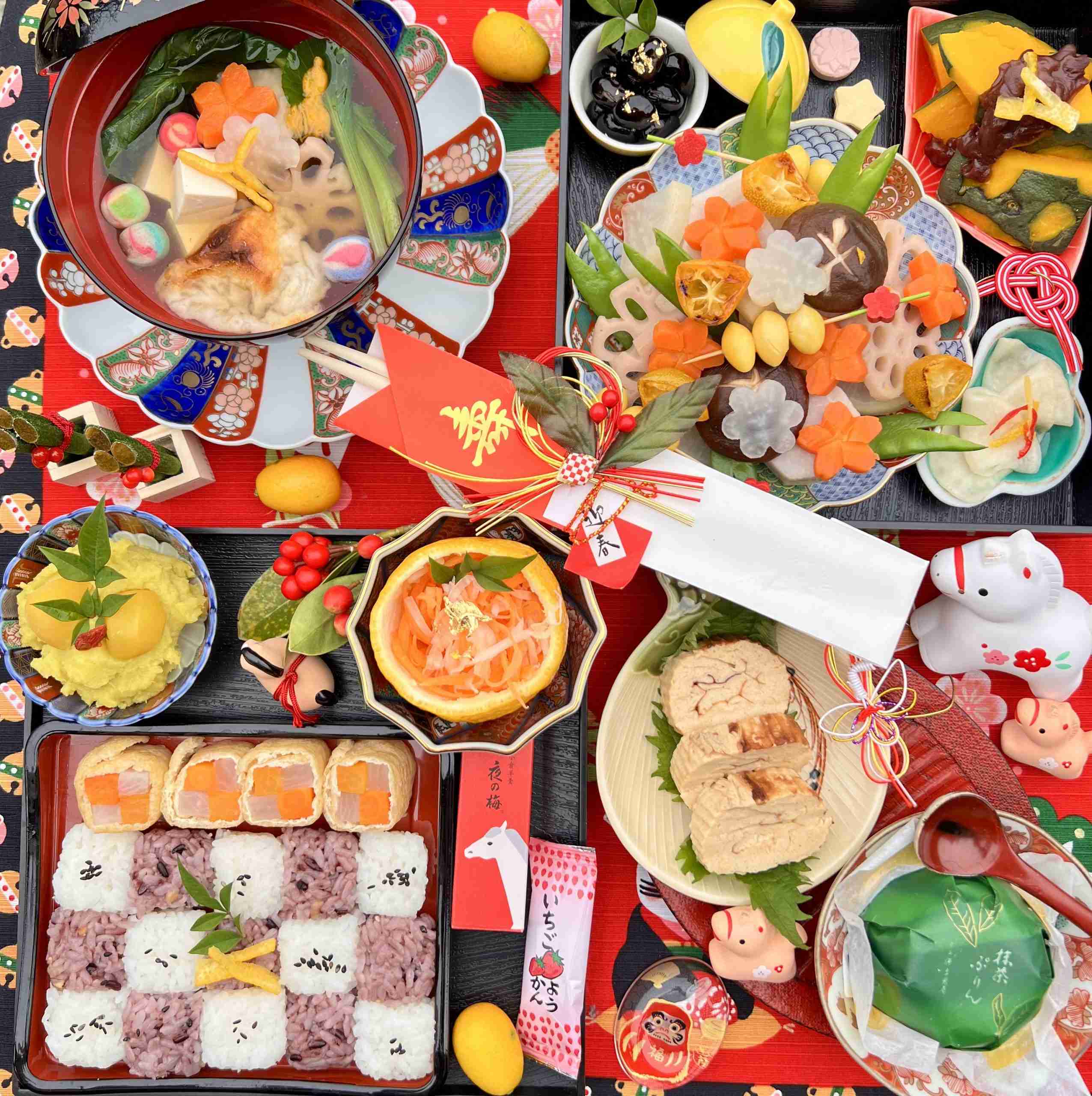
This year I put all this together into one celebration meal by making 16 small rice balls with chopped shungiku (chrysanthemum greens), red shiso and ume vinegar, adding two of each to aburaage fried inari pouches, the favourite food of inari. Finishing off with a sprinkle of sesame seeds and a salted sakura flower, to welcome in the spring.


How ever you might celebrate the seasonal change it helps link us to the past, keep us in the present and preserve for the future.

Blog

Hishi Mochi 菱餅 For Hina Matsuri 雛祭り

March 3rd is the second in the five main seasonal festivals of Japan Joshi no Sekku 上巳の節句. Sometimes called Momo no Sekku (Peach festival ) or (dolls festival) but more commonly known as Hina matsuri 雛祭り. This festival originally celebrated both boys and girls but over time the celebration ended up being just for girls when Tango no Sekku became popular, known as boys day.

Each year on March 3rd, homes across Japan are transformed with elegant tiered doll displays, soft pink peach blossoms, and carefully prepared seasonal sweets. This Hina Matsuri celebration, is something I’ve spoken about over many years here on my blog. It’s a day dedicated to wishing health, happiness, and protection for young girls.

Among the beautifully arranged hina dolls sits a striking, diamond (rhombus form) shaped sweet layered in white green and pink (also shown green, white and pink) Hishi Mochi 菱餅 / ひしもち). The white, green and pink ordering represents seasonal growth from snow to spring growth to blossoms and reflects older regional traditional ordering, while nowadays you will more often see the order changed to green, white and pink. Originally in the Edo period the mochi only had two layers and the pink was added later. At first glance, it appears simple. Yet its shape and colours carry centuries of symbolism, seasonal meaning, and protective wishes woven into Japan’s cultural history.

To understand Hishi Mochi fully, we must first look at where Hina Matsuri itself began.

Hina Matsuri traces its roots back over a thousand years to the Heian period . During this era, an aristocratic custom known as hina-asobi (doll play) became popular among court children. At the same time, a purification ritual called nagashi-bina was practiced, people would place paper or straw dolls into rivers to carry away illness and misfortune.These two traditions gradually merged.

The dolls, originally used as symbolic substitutes to absorb bad luck, evolved from simple paper figures into the elaborate hina doll sets displayed today. Rather than being set afloat in rivers, they were placed inside homes as protective guardians for daughters.


By the Edo period (1603–1868), Hina Matsuri had become an established annual festival. The doll displays grew more ornate, and celebratory foods including Hishi Mochi became part of the tradition.

Seasonal foods have always played an important role in Japanese celebrations, often chosen for their symbolism as much as their flavour from Sanshoku 三色団子 dango to Chirashizushi五目ちらし寿司. Why not read more about these on my previous Hina Matsuri blog posts.

Hishi Mochi became associated with Hina Matsuri because it embodied, protection from evil, fertility and growth, health and vitality and the arrival of spring. The diamond shape (hishi) is linked to the water caltrop plant, long believed to promote fertility and ward off misfortune. Meanwhile, the three colours reflect both seasonal change and protective symbolism passed down through generations.

Over time, what began as a purification ritual transformed into a deeply personal family celebration. Today, Hina Matsuri is less about warding off spirits and more about expressing love and hope for a daughter’s future.

Hishi Mochi remains displayed beneath the dolls not merely as a sweet treat, but as a visual prayer.

May her life be pure and peaceful.

May she grow strong like new grass.

May she blossom beautifully like the peach flowers of spring.

But this traditional rice cake is more than just decorative, every detail carries meaning.

The word hishi (菱) refers to the water caltrop plant, whose leaves and fruit naturally grow in a diamond shape. The diamond form is believed to symbolise fertility and growth, represent protection and warding off evil and reflect the shape of the heart in classical Japanese symbolism.

The layered diamond also visually echoes harmony and balance qualities parents wish for their daughters’ future. When displayed beneath the hina dolls, the stacked shape resembles stability and gentle upward growth,a quiet prayer for steady development and happiness.

Traditional Hishi Mochi consists of three layers though modern versions have changed the order and may even have more layers.

Pink top

Represents peach blossoms and symbolises protection from evil spirits also associated with femininity and celebration.?Peach blossoms are especially important because Hina Matsuri was historically known as the Peach Festival.

Green middle

Represents new grass and vitality, it symbolises health and long life and is associated with growth and renewal. The green layer traditionally contains mugwort (yomogi), a herb believed to have protective and healing properties.

White bottom

Represents purity and cleanliness, a fresh start and sometimes associated with snow on the ground. White suggests spiritual cleansing and protection for the coming year.

Together, the colours tell a seasonal story:

White (lingering snow),Green (new grass) Pink (peach blossoms)

It symbolises the transition from winter to spring just as young girls grow and blossom into adulthood.

Hishi Mochi isn’t just eaten it’s displayed. Like the Hina Dolls themselves, it represents a heartfelt wish for health, happiness protection and growth. Each layered colour and careful shape expresses a parent’s quiet hope for their daughter’s future.

In the delicate layers of Hishi Mochi, we find more than sweet rice cake we find centuries of quiet hope. Its diamond shape speaks of protection and growth, while its soft shades trace the gentle arrival of spring. Displayed during Hina Matsuri it becomes a symbolic offering, a wish for health, happiness, and a life that blossoms beautifully.
The mochi is eaten by eating all the corners first to form a circle which symbolises eternity and then finally eating the circle.

Though small and simple in appearance, Hishi Mochi carries a profound message that love, tradition, and heartfelt prayers for the future can be expressed in even the humblest of sweets.

Blog

NyanNyan-ji (猫猫寺) Cat Temple

Kyoto NyanNyan-ji (猫猫寺) Cat Temple

Nyan Nyan-ji, which literally translates to Meow Meow Temple, is a haven for cat lovers.

I can’t think of a better place to talk about on my blog on Japans Cat Day than my visit to the Nyan Nyan-ji, Cat Temple last May.

In Japan Cat Day is known as “Nyan Nyan Nyan Day”. “Nyan” is the Japanese equivalent of “meow”, the noise made by cats, and “ni” is the Japanese word for number two. February 22 (written 22/2) is pronounced “ni ni ni”, which apparently resembles “nyan nyan nyan”.

When you plan a trip to Kyoto you may of thought you would see every kind of temple imaginable, serene Zen gardens, grand pagodas, moss-covered stone paths… but nothing will prepare you for NyanNyan-ji (猫猫寺), the world’s first temple style art museum dedicated to cats. It’s a “cat lover’s paradise.”

Even saying temple feels understated this place blends traditional Japanese architecture, playful cat art everywhere you look, and that quiet, almost spiritual vibe that Kyoto does so well.


NyanNyan-ji
is the world’s first temple style art museum, nestled in Kyoto’s lush Yase district and centred entirely around the charm of cats. Set within a beautifully preserved 100 year old traditional home, known as a
kominka 古民家 that was converted into a temple like art museum.


The space features sliding doors and ceilings overflowing with cat inspired artwork, immersing visitors in a playful yet serene artistic world. Inside, the gallery showcases the creations of Miyano Kaya, a cat artist who has been devoted to her craft since the age of 11. She has painted cats across all 24 sliding doors of the building and also designed the temple’s iconic maneki-neko (beckoning cats) and cat daruma dolls.


NyanNyan-ji sits in the Yase area of northern Kyoto
, enjoying panoramic view of Mt. Hiei and the Takano river surrounded by trees and gentle hillside air, a peaceful little corner of kyoto far from the city crowds.

Arriving I really didn’t know what to expect and after paying the ¥800 entrance fee stepping through the entrance felt like entering a secret world. The principal deity of NyanNyan-ji is Dainichi Nyarai, a beckoning cat incarnation of the Buddha.

Every room is filled with cat themed art from colourful sliding doors to tiny sculptures tucked into old wood nooks.

There’s a joyful mix of humour, tradition, and modern art that somehow works beautifully together though slightly surreal. The ticket gave me access to the whole museum from the main hall and cat covered sliding doors to the gallery space with works by cat artist Miyano Kaya.

Places of interest include:

Main Hall: Where traditional temple elements meet feline iconography even the deities have a cat-themed twist.  To the right of the main hall are the principal deities “Dainichi Nyarai”, “Neko Fudo” and “Neko Kannon”. To the left of the main hall is “Sanshu no Nyangi”. The ceiling paintings of unique cats, created by 44 artists.


Tenshi-Neko Room:
The sliding door painting with this angel cat on it is a work by cat artist Miyano Kaya.

Maneki-Neko Screens: The sliding screen paintings, which feature 22 beckoning cats on 12 sliding screens, are also work by the same artist.

Gallery: Showcasing pieces by Masano Kaya including some works recognised internationally.


This
is not a cat shelter, so you probably won’t find a bunch of cats roaming around but the art makes up for it.

What surprised me most was how this place manages to be sacred, silly, and beautiful all at once. If you love cats, creativity, or hidden corners of Kyoto that feel like a secret shared between you and the city, NyanNyan-ji rewards curiosity.


What I found interesting was the “
Ancient Cat Civilization Exhibition” displayed in a room below the main temple art.

Where relic type items inspired by ancient civilisations, were exhibited (e.g., stylized Egyptian cat artefacts and other imagined cat civilisations.)

Whimsical and playful relics/artifacts rather than traditional archaeological pieces themed around cat culture and mythologies.

The relics bit especially feels like you’ve stumbled into an alternate universe where cats invented civilisation first and nobody explained that to you beforehand.


Not creepy, not exactly profound just charmingly unhinged, which was kind of its magic.

If you’re in the mood for something weird but memorable and you love cats this temple/art museum is definitely for you!

There is a wide selection of good luck items, including goshuincho (stamp books), omamori (amulet), ofuda (paper charms), votive plaques and much more.
I bought this omamori with a little black cat in memory of my beloved black cat that passed away a few years ago.

To get there you need to take the special train called “HIEI”on the Eizan Electric Railway on the Eizan Line which is 5.6 km long from Demachiyanagi Station (which you can reach from central Kyoto), and then hopping off at Yase-Hieizuguchi Station.

From Demachiyanagi station, trains on both lines head north to the Takaragaike station, where the lines split into two directions. One line goes eastward to Yase-Hieizanguchi station, and the other line goes westward to Kibuneguchi and Kurama stations.

From Yase-Hieizuguchi Station  it’s about a 20-minute scenic walk through lovely neighborhoods and forest paths following the Takano river. You can even board the Eizan cable car and ropeway to the top of Mt.Hiei after or before your visit if you wish which you pass on your walk.

NyanNyan-ji alone: ¥800 for adults

Children: ¥300

Combo ticket (includes nearby Nyan-paku museum): ¥1,200

Children combo: ¥500

(There’s also a small discount for visitors with disabilities.)

Opening hours are usually 11:00–17:00 on weekdays and a bit later on weekends (until 18:00), and NyanNyan-ji is closed on Tuesdays (though they open on public holidays).

You have a few options after your visit, you could visit NyanNyan-ji morning or afternoon and then get back on the train and get off at Takaragaike station and get the Kurama line westward to Kibuneguchi and Kurama stations, to visit Kifune-jinja and Kurama-dera temple. If you would like to read about my visit to these you can do so on my “ Yama no Hi” post.


On returning back to
Demachiyanagi station I would recommend a few of my favourite places to visit in the area like the “Shimogamo Shrine”  one of the oldest Shinto shrines in Japan.

Just a 3 minute walk from the station is where the Kamo river which runs through Kyoto splits this place is called “Kamogawa Delta” here you will find the 83 “tobi-ishi”飛び石 stepping stones some in the shape of giant turtles 亀 (kame) which are loved by adults and children alike.

Last year I decided to go to a peaceful tea house after my visit to NyanNyan-ji  just a short 17 minute walk from Demachiyanagi station down Imadegawa Dori entering Kyoto Gyoen National Garden through the Imadegawa Gomon Gate.

The tea shop is called Sasayaiori

Sasaya Iori,is an historic wagashi (Japanese sweets) maker with roots going back over 300 years. Founded in 1716, Sasaya Iori has long been associated with Kyoto’s imperial and tea-ceremony culture, creating traditional sweets for temples, tea masters, and the Imperial Palace.

This tea house is one of their modern tea house cafés, which blends this deep history with a relaxed, contemporary setting. The space felt calm and understated  the kind of place where you naturally slow down, sip carefully, and take in the moment.

The standout for me was their iced matcha easily one of the best I had in Japan. Smooth, vibrant, and perfectly balanced, it avoided the bitterness that lesser matcha can have. It was refreshing without being diluted, and clearly made with high quality tea. The only thing I regret is not buying some to bring home.


Sasaya lori is a wonderful example of how Kyoto preserves tradition while making it accessible whether you’re deeply familiar with tea culture or simply looking for a quiet place to enjoy an exceptional matcha. This was the end to a (Purr-fect) day.

Blog, Winter Food

Hanabira Mochi

Hanabira Mochi The First Sweet of the Japanese New Year

As the New Year begins in Japan, the season is marked not by loud celebration but by quiet symbolism, reflection, and tradition.
One of the most delicate expressions of this spirit is
hanabira mochi (花びら餅)

Simple in appearance yet rich in meaning, hanabira mochi carries centuries of history, connecting modern kitchens to Japan’s imperial past.

Hishi Hanabira Mochi (花びら餅) refers to the original, historical form of the Japanese New Year sweet known today as hanabira mochi literally meaning “flower-petal mochi.”

It is a delicate ceremonial Japanese sweet traditionally eaten at the beginning of the New Year, especially in January, and is often considered the first wagashi of the year which was initially served to the imperial court.

The origins of hanabira mochi can be traced back to Japan’s imperial court during the Heian period. It is closely associated with a New Year ritual known as ha-gatame (歯固め), which literally means “tooth-strengthening.” During this ceremony, court nobles symbolically consumed foods thought to promote strong teeth, good health, and longevity for the year ahead.

Rather than being purely medicinal, these foods were rich in meaning linking physical strength with spiritual well being.

Hanabira mochi is believed to have evolved from this tradition, preserving the symbolism of health and endurance in a refined confection.

Hanabira mochi carries specific symbolic meaning associated with the Japanese New Year celebration. It consists of a thin mochi skin, the outer white layer representing melting snow of the past winter, and welcoming in the spring.

The shape and colouring of hanabira mochi are inspired by the plum blossom (ume), one of the earliest flowers to bloom in Japan, often while winter still lingers. Plum blossoms symbolise, renewal, hope and perseverance through hardship and the transition from winter to spring. The soft white mochi represents purity and new beginnings, while the hint of pink suggests life stirring beneath the surface a poetic image for the start of a new year.

The subtle pink colour hishi (diamond-shaped) mochi,  showing through the white mochi is inspired by the leaves of the water caltrop plant (hishi), a sacred plant believed to ward off evil omens and ensure longevity. This represents the Japanese plum (ume) blossom. The plum blossom is the first to bloom in the new year, symbolising purity, perseverance, and renewal.
The sweet bean paste filling, typically flavoured with white miso, alludes to the zoni (New Year’s soup) eaten during the New Year’s celebration at the imperial court.

One of the most distinctive features of hanabira mochi is the inclusion of burdock root, a slender piece of  sweet simmered candied burdock root (gobō) protruding from the sides. An unusual ingredient in a sweet.

In Japanese culture, burdock root represents longevity, due to its long, straight shape, stability and resilience as it grows deep into the earth and vitality, as a nourishing traditional food. Its presence is a direct reference to the ancient ha-gatame ritual, quietly carrying wishes for strength and a long life into the New Year. The thin strip of candied burdock historically represents ayu, a sweet river fish that was a traditional New Year’s food at the imperial court. Its long, thin shape is also a symbol of longevity.

The mochi is folded into a half moon shape resembling a plum blossom petal.This restrained elegance is a hallmark of wagashi enjoyed at the start of the year.

For centuries, hanabira mochi was enjoyed only within aristocratic circles. It later became associated with the Japanese tea ceremony, particularly through the Urasenke school in Kyoto.

Today, hanabira mochi is traditionally served at the first tea gathering of the year (hatsugama) and is sold by wagashi shops for a limited time in January. Its brief availability reinforces the Japanese appreciation for seasonality and fleeting moments.

Hanabira mochi is not eaten for indulgence alone. It is considered the first confection of the year because it embodies New Year wishes, health and strength through its historical origins, longevity symbolised by burdock root, purity and renewal with its mochi exterior, hope and perseverance through its plum blossom form. Eating it is a mindful act and a quiet way of welcoming the year ahead.

Unlike brightly decorated festive sweets, hanabira mochi is intentionally understated. Its beauty lies in subtlety, tradition, and meaning rather than extravagance.

To enjoy hanabira mochi is to pause, reflect, and begin the year with care, a philosophy deeply woven into Japanese New Year culture.

As the New Year dawns in Japan, many of the festive foods that define December fade from view, but one refined sweet quietly heralds the season ahead “hanabira mochi.” This delicate wagashi, with its pale white mochi, hint of blush, and slender strip of burdock root, isn’t just a treat it’s a ceremony in itself. Rooted in ancient imperial traditions and now inseparable from the first tea ceremony of the year (hatsugama), hanabira mochi embodies wishes for health, longevity, and renewal. In many Kyoto tea rooms and wagashi shops each January, it’s served alongside a bowl of matcha to mark a fresh beginning. Whether you’re celebrating in Japan or in your own kitchen, making hanabira mochi connects you to centuries of seasonal symbolism and mindful taste.

Hanabira mochi is traditionally served at hatsugama the first tea ceremony of the year, particularly in Kyoto tea schools rooted in centuries old etiquette. While these events are often by invitation within tea communities, some public tea exhibitions and cultural programs around New Year in Japan may offer a chance to participate or watch. The sweet is normally eaten in a period from New Year’s Day until the  15th of January, Koshogatsu (‘little new year’), New Year’s in the old lunar calendar.


Hatsugama (初釜)
literally means “first kettle.”

Hatsugama refers to the first formal tea gathering of the New Year in the Japanese tea ceremony tradition and is usually held in January, often within the first few weeks of the year.

Rather than being a festive party, hatsugama is a solemn yet joyful occasion, marking a respectful beginning to the year ahead.

At its heart, hatsugama is about renewal.

The gathering is an opportunity for the host and guests to express gratitude for the past year, and to welcome the New Year with humility and mindfulness. Everything about hatsugama emphasizes fresh starts, clean utensils, new charcoal, seasonal decorations, and carefully chosen sweets.

In tea ceremony, the kettle (kama) is central it provides the hot water used to prepare matcha.

The first boiling of the kettle in the New Year is therefore symbolic, representing, new energy,purification, continuity of tradition. For tea practitioners, attending or hosting hatsugama is often one of the most important events of the year.

Hatsugama gatherings are marked by subtle seasonal touches rather than elaborate displays like hanging scrolls which often feature New Year calligraphy or auspicious phrases. Tea utensils may be especially treasured or newly introduced, flowers are minimal, reflecting winter’s restraint and sweets are chosen with deep seasonal meaning. This quiet elegance mirrors the winter season and the reflective nature of the New Year.

Hanabira mochi is traditionally served at hatsugama because it embodies the same values as the gathering itself. It reflects, health and longevity  (through its historical connection to ha-gatame rituals). New beginnings (through its white mochi and plum blossom form) and respect for tradition (as a sweet long associated with tea schools). For this reason, hanabira mochi is closely associated with Kyoto tea culture and is rarely seen outside of January.

Unlike Western New Year celebrations, hatsugama is not about spectacle. It is about beginning the year calmly, intentionally, and with awareness a philosophy at the heart of both tea ceremony and wagashi. Enjoying hanabira mochi alongside a bowl of matcha during hatsugama is a reminder that the New Year does not have to be loud to be meaningful.

Below is my recipe for making hanabira mochi at home, inspired by this centuries old tradition.

For the burdock:

You will need one large piece of burdock root scrubbed of any dirt and cut to 15cm (my burdock root was quite thin so I did  a few pieces)

Then take a bowl and make vinegar water around 2-3 tablespoons of vinegar water enough to cover and soak the burdock for 30 minutes.

Take the water from the first rinse of washing Japanese sushi rice and pour it into a pan. Drop in your burdock and place on the lid, simmer on a low heat for 2 hours. Keep checking to make sure it doesn’t go dry, topping up if required.

Remove the burdock after this time and drop into cold water.

Leave in the water for 15 minutes. Remove the burdock from the water and cut to 12cm in length then cut in half lengthways. (if your burdock is large cut each half in half again and cut this in half again so you have 6 pieces about 5mm wide). Take each piece and slice off the inner core of the burdock.

Add 75gm of sugar to a pan and 75ml of water, heat the water to dissolve the sugar and drop in your cut pieces of burdock and simmer gently on low heat for 10 minutes. Turn off the heat and leave the burdock in the sugar water to cool and pickle for a few hours

When you’re ready to use the burdock remove from the liquid and pat dry with kitchen towel.

If you wish you can prepare your burdock ahead of time.

Prepared burdock root  when simmered in a sweet syrup will keep in the refrigerator for about 4 days when stored in an airtight container.

The sugar in the syrup acts as a preservative, which helps extend its shelf life.

The flavour is often best within the first few days.

For the filling:

You will need 50g of white bean paste mixed with 10g of white miso paste.

Roll into equal balls and put aside.

For the mochi:

Make two lots of mochi one with a little red/ pink dye added. I use beetroot powder to the Joshinko to make sure it’s vegan.

For each

100gm Joshinko flour

x1 tablespoon of granulated sugar

130ml of cold water

You will You will need a round cutter (I used one 78mm diameter), a rolling pin, plastic wrap and microwaveable bowl. Also you will need to dust a baking sheet with potato starch

Make the white mochi (microwave method)

If you would like to make mochi with out a microwave by Take a metal pancake ring and add this to a steamer basket over boiling water. Place inside the pancake ring some muslin cloth and pour in your mixture. Put the lid on the steamer and steam for 15 minutes.

Add to a bowl the joshinko flour and sugar then mix to combine. Add the water and whisk to a smooth paste.

Cover the bowl with plastic wrap and microwave for 3 minutes then remove the wrap. Wet the end of a rolling pin or pestle and begin to pound the mochi until it’s nice and elastic. When it’s cool enough to handle knead into an elastic smooth dough with damp hands.

Turn out onto some parchment and add more parchment on top and roll out thinly.

I find doing this with the parchment is a guaranteed way of your mochi not sticking. Cut out x6 rounds and place them on your baking sheet dusted with potato starch.

Do the same with the pink mochi but this time make a rectangle and make the mochi slightly thicker. Cut out x6 square shapes.


To assemble place a pink diamond shape on the round mochi and stretch out to more of an oval shape, followed by placing a piece of burdock root on top. Finish with a ball of white miso bean paste and fold over one half to the other to make a half moon shape. Do the rest until they are finished.

The delicate texture and short shelf life of the mochi itself (typically best eaten on the day) means that while the burdock filling can be made in advance, the final assembly of the hanabira mochi should be done on the day when you plan to eat them.

Bringing the Spirit of Hatsugama Into the Home

While hatsugama is traditionally a formal tea gathering held within tea schools and tea rooms, its underlying philosophy is not limited to practitioners alone. At its core, hatsugama is about beginning the year with intention, care, and quiet gratitude, something that can be observed in small, personal ways.

At home, this might simply mean setting aside a calm moment in January to prepare tea with extra attention. Choosing a favourite cup, cleaning utensils carefully, and taking time to enjoy the warmth of the tea can echo the sense of renewal that defines hatsugama.

Serving a seasonal sweet such as hanabira mochi alongside matcha or green tea further deepens the experience. Even without formal ceremony, the act of pairing tea with a sweet rooted in New Year symbolism connects the moment to centuries of tradition.

Many people in Japan observe tea customs informally in this way not as strict ceremony, but as a mindful pause at the beginning of the year. It is less about perfect form and more about awareness of season, history, and gratitude.

In this sense, preparing hanabira mochi at home becomes more than following a recipe. It becomes a personal New Year ritual a quiet way to welcome the year ahead with intention and respect. It is a sweet that invites reflection on time, tradition, and the changing seasons.

Blog, Winter Food

The Year of the “Fire Horse” Hinoe-Uma 丙午


The Year of the horse 2026 is a time filled with energy, movement, and a bold spirit. In the Japanese zodiac (eto) the horse is known for its strength, independence, and love of freedom, symbolising progress and determination. People born under this sign are often seen as confident, hardworking and adventurous, always ready to chase new opportunities. This year encourages us to move forward with courage, embrace change, and trust our own abilities now the year of the snake has cleared our path. In this blog, I will explore the meaning of the year of the horse, talk about a few horse shrines I visited on my latest trip to Japan and talk introduce more auspicious foods eaten at this time.

The year 2026 is specifically the year of the Fire Horse (Hinoe-Uma 丙午),  a combination that occurs only once every 60 years. The Horse (午 / Uma) is the seventh sign of the zodiac and is associated with energy, movement, freedom, ambition and optimism.

Horses are symbolic of speed, independence, and a strong life force. The sign is considered one of yang, outward directed energy and a smooth path for the future. In fact the Japanese word for horse “Uma” also means smoothly.

What 2026 May Bring

A Year of Big Movement & Fast Change

Horse years typically accelerate life’s pace. Expect rapid progress, shifting trends, high motivation and innovation. Fire adds extra spark, making 2026 feel like a year where change comes quickly and decisively, with creativity and bold ideas. Fire horse energy encourages artistic expression and daring ventures, breaking away from the ordinary and taking more risks with bold ideas. It’s an excellent year for entrepreneurial or self-driven projects. Horse years often inspire, travel, new experiences and expanding horizons. Perfect for people looking to reinvent part of their life.

How can we use this fire horse energy in 2026? Lean into new beginnings. Start something fresh, a job, project, or creative pursuit. Be bold but not reckless. Use the energy wisely and avoid unnecessary risk. Nourish physical energy, movement (exercise, dance, travel) these aligns well with horse energy. Stay adaptable, fast change means being flexible. Channel passion into purpose, fire can warm or burn, direct it with intention.
Why not decorate your house with a figure or ornament of a horse. It is said that if you do this it will help guide the New Year deity “Toshigami-sama into your home who brings in blessings and prosperity for the coming year.

Sacred Horses in Japan (Shinme / Shinba)

Historically, in many Shinto shrines across Japan, people presented real horses as offerings to kami. The horse’s speed, strength, and stature made it an ideal mount for the deity  carrying prayers or divine messages between the realms.

Over time, because of the cost and difficulty of maintaining horses, shrines replaced live horses with wooden or painted horse figurines, horse-plaques, or sculptures. The practice evolved into what many people know today as Ema (絵馬) literally “picture-horse” tablets on which worshippers write their wishes or prayers.

Even in modern shrines that no longer keep live horses, symbolic “sacred horses” (statues, effigies) preserve the tradition of the horse as a spiritual intermediary  a bridge between this world and the kami’s world.

The Picture Horse 絵馬 “Ema”

If you have ever visited a Shinto shrine in Japan you will of seen wooden tablets people buy to write a wish or a prayer on.

They are then hung in the shrine so that the shrines (kami) deities can receive the message and each year around New Year they are burned as a final offering of prayer. Why are they called “Ema”?  絵 (e) = picture 馬 (uma / ma) = horse. So literally: “picture-horse.”
Over time the imagery expanded (deities, zodiac signs, personal motifs), but the name “Ema” stayed. So even today, every ema no matter what picture is on it is rooted in the ancient tradition of giving a sacred horse to the gods.

This year I visited a few shrines dedicated to horses on my trip to Japan. One stop from the famous Fushimi Inari Shrine on the JR Nara line is Fujinomori Station named after the shrine there.

Fujinomori Shrine is an ancient shrine, its roots go back roughly 1,800 years. It was said to have been established by Empress Jingu before the capital moved to Heian-kyō. Over time it became strongly associated with “victory, good fortune and horses.” The shrine historically served as a guardian of the southern part of the capital and was widely respected by imperial court members, samurai, and the general public. Because of its link to horses, riding, and “victory/luck,” it remains especially popular among people involved in horse racing (jockeys, trainers, fans), as well as those seeking “winning luck” more broadly. The shrine hosts an annual festival, Fujinomori Matsuri, held each year in May. 

What You Can See at the Shrines Horse-Related Features

 Inside the grounds there is a small treasure hall (宝物殿 / “Hōmotsuden”), which includes a “horse hall”  with horse miniatures, memorabilia, and exhibits from Japan and around the world. There’s also historical armor, saddles, weaponry and artifacts, reflecting the shrine’s historic martial spirit.

There is a tradition of “horse good-luck charms” and votive offerings tied to horse racing and victory those seeking success in races or life tend to visit and pray here.

 The shrine grounds also feature beautiful gardens. For example, a hydrangea garden of about 5,000 m² (with around 3,500 plants) blooms around June giving the shrine another appeal beyond its “horse shrine / victory shrine” identity.

Fujinomori Shrine shows how  in traditional Japanese culture horses were not only practical animals but spiritually and symbolically powerful. The shrine ties together war era horse practices, Shinto beliefs, folk traditions (like the festival), and modern interests (horse racing, good luck prayers).

While wondering around Hiroshima I stumbled across another horse shrine located near the castle Gokoku Shrine.

Hiroshima Gokoku Shrine was originally founded in 1869 (Meiji era) to honour those from Hiroshima who died in the Boshin War. Since then it evolved, and in 1939 its name was changed to “Gokoku Shrine.”

The shrine was destroyed during the atomic bombing of Hiroshima in 1945, but was rebuilt in 1965 within the grounds of what was (at that time) the historic Hiroshima Castle.

On the shrine grounds there is a bronze horse statue referred to as a “Shimme Horse” (sacred horse).

In the Shinto tradition, a “sacred horse” (or “shinme / shinba” — 神馬 / 神馬) is believed to be the mount of a kami (spirit/deity) when it travels between the human world and the divine realm. Horses were historically presented to shrines as a divine vehicle where that became impractical, sculptures or symbolic representations replaced live horses. Thus the horse statue at Hiroshima Gokoku Shrine is not just decoration it carries religious symbolism and the link between the human world and the spiritual world.

The inclusion of a sacred-horse statue at Hiroshima’s Gokoku Shrine suggests a desire to honor tradition  even in a shrine whose primary purpose is to memorialize war dead and national history. The horse statue connects to older Shinto customs, reminding visitors of ancient beliefs about animals, spirituality, and the sacred role of horses.

The resurrection of the shrine (after the atomic bombing) and the presence of the horse statue may also signal continuity  a blending of historical memory, religious symbolism, and modern remembrance.

These shrines give concrete cultural and religious contexts that deepen the zodiac’s meaning reminding us that in Japan, the horse is more than a zodiac sign, it’s a powerful spiritual, historic, and symbolic presence.

I have spoken many times on my blog each year about the significance and symbolism behind certain foods eaten at New Year. If you’re interested please give them a read. This year I would like to introduce a few more.

About the Ichimatsu Motif (市松模様)

The Ichimatsu motif is a classic Japanese pattern made up of alternating squares, similar to a checkerboard. Although simple in appearance, it carries deep cultural significance and has remained a beloved traditional design for centuries.

The pattern is named after Sanogawa Ichimatsu, an Edo-period kabuki actor (18th century) who popularised the design by wearing it on his costumes. Because kabuki actors often set fashion trends, the pattern quickly spread throughout Edo society. Over the years, it became associated with stylishness, good fortune, and continuity. The repeating squares express: Prosperity that continues without interruption. Balance and harmony. Stability and long-lasting relationships. For this reason, the Ichimatsu pattern is often used in celebratory contexts, making it a fitting motif for New Year, when people in Japan pray for longevity, health, and prosperity in the coming year. Ichimatsu is also used in kimono, furoshiki wrapping cloths, ceremonial decorations, and traditional crafts. The design gained renewed international attention when it was incorporated into the Tokyo 2020 Olympics emblem, chosen to express unity and diversity. You can also see it in New Year decorations, packaging for osechi ryōri, and festive accessories. Because the pattern symbolises continuity and good fortune, it pairs naturally with New Year themes such as: Osechi ryōri, which contains auspicious foods arranged beautifully sometimes in boxes or wrappers decorated with Ichimatsu.

Fukubukuro (lucky bags), where the motif may appear to represent ongoing luck. Kagami mochi displays and celebratory textiles used during shōgatsu (New Year) that sometimes incorporate geometric traditional patterns including Ichimatsu.

The Ichimatsu motif beautifully expresses what the Japanese New Year represents, continuity from old year to new, hopes for steady good fortune and a harmonious start.


Age-Fukubukuro: Fried Tofu “Good Fortune Bags” for the New Year

Among the comforting dishes enjoyed during the Japanese New Year, one charming item with deep symbolism is the age-fukubukuro, small fried tofu pouches filled with ingredients and simmered in a gently sweet broth. These pouches are also known as kinchaku (巾着), named after traditional drawstring money bags, and are prized for their associations with luck, prosperity, and abundance. 

The imagery behind these tofu pouches is part of their charm, the shape resembles traditional money purses, which makes them a symbol of wealth and good fortune. Because they hold precious fillings, they represent welcoming blessings into one’s household. They also could relate to one of the seven lucky gods “Daikokuten” who like a Japanese style Santa Claus rewards the deserving with fortune from his fukubukuro “lucky bag”.

The act of tying the pouch closed (with kanpyo strips or toothpicks) echoes the wish to “seal in” good luck and secure prosperity throughout the year.

This symbolism makes them a beautifully natural addition to New Year meals, where almost every ingredient carries an auspicious meaning.

Age-fukubukuro / kinchaku appear in several New Year dishes:

Oden, where the tofu pouch is stuffed with mochi (called mochi-kinchaku)—a warming winter dish often served during the holiday period.

Festive simmered dishes (nimono), where the pouches are filled with vegetables, mushrooms, or lucky foods such as black soybeans or burdock root.

Home-style New Year meals, where families create their own fillings as a playful and meaningful way of welcoming good luck.

The fried tofu itself aburaage has long been considered a food that “invites” good fortune, partly due to its association with Inari, the Shinto deity of prosperity and harvest.

Including age-fukubukuro in your New Year food highlights a wonderful example of how Japanese cuisine blends symbolism with flavour. These little “fortune bags” embody: Prosperity, Blessings contained and protected, Warmth and homestyle comfort during shōgatsu.

Ozoni (お雑煮)
Ozoni eaten in the morning of the new year often has a piece of yuzu rind cut into a particular shape to garnish it. Did you ever wonder what this represented? It is a
stylised pine needle (matsuba) 松葉

I have spoken about the significance of the “The Three Friends Of Winter” in Japan in last years New Year blog post. The “pine, bamboo and  plum” are symbols of auspiciousness.

Often you will find symbols of pine in New Years from Various foods which are made to resemble pine cones (matsukasa) and needles (matsuba). Pine are symbol of longevity and resilience in Japan. Adding this yuzu garnish to your New Years Ozoni adds an aromatic seasonal touch.

As we welcome the Year of the Horse, Japanese New Year traditions remind us that food is more than nourishment, it’s a way of carrying hopes into the year ahead. From dishes that symbolise strength and progress to flavours that invite health, happiness and good fortune, each bite connects us to generations of meaning and care. By sharing these lucky foods at the start of the year, we set an intention to move forward with energy, resilience, and gratitude, embracing the journey ahead with the same steady spirit as the Horse itself.


Blog, Winter Food

Yubeshi (ゆべし) & The Winter Solstice

Yubeshi (ゆべし)

The Unique Japanese Treat With A Surprising History

When most people think of Japanese sweets, many treats might spring to mind from daifuku to taiyaki. But hidden among Japan’s regional specialties is a delicacy that’s both traditional and delightfully unexpected, “Yubeshi”.

This intriguing confection is one of Japans older traditional foods, with its origins stretching back centuries. It wasn’t originally a sweet treat at all, but rather a preserved portable food made to last a long time, used as a preserved easy to carry sustenances rather than confectionery. Depending on where you find it in Japan, it might look and taste completely different. Yet one thing stays the same yubeshi is a sweet that tells a story.

Yubeshi is a type of traditional Japanese wagashi (和菓子) Japanese sweet), usually made from sticky rice flour, soy sauce, sugar, and citrus, most commonly yuzu. But yubeshi isn’t just one thing it comes in several regional variations.

As the end of the year approaches and the evenings grow dark earlier, we prepare for the winter solstice known as tōji (冬至 ) in Japan . The Winter Solstice in Japan among other things is usually associated with the yuzu fruit. Yuzu is a citrus fruit enjoyed for its aromatic properties it is believed the fruit can ward off bad luck. Japanese people celebrate the solstice as they welcome the return of longer days, they pray for good health and eat auspicious food. When I saw the Iwami yuzu citrus variety being sold by The Wasabi Company from Shimane Prefecture I  thought this would be the perfect opportunity to try yuzu yubeshi.

Citrus Yubeshi (柚餅子)

This carefully crafted savoury variety is perhaps the most iconic version. Originally, it was a preserved food the combination of citrus oils, soy sauce, and salt helped keep it fresh. Over time, it shifted from a practical food to a ceremonial one, often appearing at tea gatherings. An entire yuzu fruit is hollowed out and filled with a chewy, miso, soy sauce mixture. After steaming the yuzu is wrapped in a breathable cloth and hung in a well ventilated area to air dry and mature for a month or longer until the skin turns dark brown.

photo credit “The Wasabi Company”

It then becomes a fragrant, deeply flavoured treat that’s sliced into thin pieces. It’s sweet, citrusy, slightly savoury, and completely unique. Today, yubeshi is cherished as a nostalgic regional snack and a specialty souvenir. The traditional method requires patience, precision, and a deep respect for regional ingredients.
Here is a list of  ingredients for the yuzu yubeshi from The Wasabi Company. 

Ingredients Miso (Soya, Rice, Salt), 32.80% Yuzu, Sugar, Peanuts, White Sesame, Sake, Roasted Soya Powder, Rice Flour, Shichimi Togarashi (Red Chilli), Ginger, Sansho.

Use code tokyopony10 for discount at the checkout

You maybe interested in knowing what Japan’s most diverse traditional sweet tastes like and how to pair it with food & drink. The yubeshi has a chewy texture, it has rich umami notes from the soy sauce and miso, with a subtle sweetness and aromatic citrus fragrance. It is a balance of sweet, salty, and citrus flavours.

How to Use Yuzu Yubeshi in Everyday Cooking

Whether you enjoy it with a cup of green tea or slice it thinly as part of a dessert platter, yubeshi offers a taste of Japan that’s both ancient and refreshingly new.

The simplest way to enjoy this yuzu yubeshi is (The Kyoto Traditional Way). Cut the yubeshi into thin slices and serve with tea. Serve with hot sencha, hojicha, or matcha. This highlights its chewy texture and subtle sweet savoury flavour. It also pairs well with sake. Try it with warm sake on a winter evening.


Yubeshi & Cheese Pairing (Highly Recommended!)

Yubeshi pairs beautifully with creamy or salty cheeses. Try it with your favourite vegan cheese.The salty sweet umami of yubeshi contrasts perfectly with richness. You could take this one step further and add slices of yubeshi to charcuterie boards, adding yubeshi offers sweet notes, citrus aroma, chewy texture and pairs well with nuts, soft cheeses and crackers. It also becomes a conversation piece.

Add it to Onigiri (Rice Balls)

Chop the yubeshi into small cubes. Mix into warm rice. Shape into onigiri. It adds a sweet, nutty, and slightly savoury surprise inside the rice

Yubeshi Butter Toast 

A modern fusion idea simple and surprisingly good.

Instructions: Toast thick cut Japanese bread (shokupan) or bread of choice. Spread with vegan butter, add thin slices of yubeshi on top.The warm bread softens the yubeshi slightly, creating a mochi like chew. You could take the cheese pairing one step further with yubeshi cheese on toast . Add your butter to the toast, top with yubeshi and cheese and grill to soften the yubeshi and melt the cheese.

Other ways yubeshi can be enjoyed is as an ice cream topping. Chop yubeshi into tiny cubes or mix into softened ice cream, or simply sprinkle on top. The chewiness adds texture and contrast.


Why not try baking it into cookies yubeshi works like mochi pieces in baked goods. Try cutting the yubeshi into small bits. Fold into cookie dough (e.g., a simple sugar cookie or oatmeal dough) Bake normally. The pieces become chewy pockets of flavour.

Simple soft cookie recipe:

ingredients

Mix in one bowl 140g of plain white flour, 1/2 teaspoon of baking soda, 1/2 a teaspoon of baking powder and a pinch of salt.

To another bowl add 70g of melted vegan butter that has been cooled, 67g of coconut palm sugar, 50g of granulated sugar, x3 tablespoons of soya yogurt, x1 vanilla bean scraped of seeds.

Mix wet ingredients into dry then fold in x1 slice of yubeshi that has been cut into cubes.

Put the bowl in the fridge for at least an hour to set. Place a piece of parchment paper onto a baking sheet and turn your oven to moderate.

Take balls of the dough and flatten them onto the parchment .This makes x8 large cookies or you can make smaller ones.
Bake in the oven until crispy and brown on the outside, remove from the oven and leave to completely cool. These cookies are crisp on the outside and soft on the inside, they are sweet with added saltiness from the yubeshi. A delicious combination that I think would be wonderful served warm with vegan ice cream.

Yubeshi is delicious sliced thinly over salad, and works wonderfully with peppery rocket and a sesame dressing or a squeeze of fresh yuzu juice.

Add to yogurt or granola bowls. Cut into tiny cubes and sprinkle over. It behaves like chewy candied fruit.

This is why I believe yubeshi deserves so much more attention. In a world filled with modern sweets, yubeshi stands out as a reminder of Japan’s culinary creativity and respect for seasonal ingredients. It’s a perfect example of how food can reflect history, geography, and tradition  all in a single bite.

Where to Find Yubeshi

If you’re visiting Japan, look for yubeshi in: Tohoku regions (Aomori, Iwate, Akita) famous for walnut yubeshi. Fukushima & Yamagata, chewy, square-style yubeshi. Ishikawa & Hokuriku, whole-yuzu yubeshi. Local omiyage (souvenir) shops. Traditional confectionery stores.

Walnut Yubeshi (クルミゆべし) 

As making yubeshi spread throughout Japan it merged and developed with local foods. More common in northern Japan (especially Tohoku), and northern Kanto local people adapted the recipe where citrus was more scarce thus making the use of yuzu impractical. Walnuts were abundant in northern woodlands, so they became a substitute. Walnut yubeshi is square or rectangular with chopped walnuts mixed into the dough directly. It has a soft, chewy texture, similar to a firm mochi, and a rich nutty flavour. So while classic yubeshi has its origins in citrus the walnuts version is a truly regional adaptation born out of local ingredients and now cherished as distinct traditional sweet in its own right.

Simple Homemade Yubeshi Recipe (Walnut Style) Kurumi Yubeshi クルミゆべしoriginating from the Tohoku region of northern Japan.

This easy to make yubeshi made from glutinous rice flour, sugar, and soy sauce, with chopped walnuts is steamed and cut into squares. I added a little yuzu citrus to the original walnut recipe for a winter solstice twist. Unlike other mochi this lasts a few days in the fridge.

Ingredients:

100g of  Shiratamako powder

40g walnuts toasted in a pan

80g brown sugar (i used coconut palm)

1 tablespoon of tamari or soy sauce

150ml water

kinako (soy bean flour) for dusting

Instructions:

1. Boil the water add the sugar and tamari to melt the sugar.

2. Grind down the shiratamako if it comes in large chunks and add to a bowl.

3. Add the sugar mixture to the shiratamako and stir to combine mixing thoroughly. Add the toasted walnuts and mix in. Add a teaspoon of yuzu juice if you wish.

4. Pour into a container with parchment paper and steam for 30-40 minutes until set.

5. Cool fully, dust a pan with kinako and tip the Yubeshi onto it then, dust the top with more kinako slice into squares.

Serve with your favourite tea.


Whether you enjoy yuzu yubeshi sliced thinly with a cup of green tea or spread on hot toast, or try making walnut yubeshi northern Japan’s speciality, they offers a taste of Japan that’s both ancient and refreshingly new.

Blog, Winter Food

Oyatsu おやつ

Fika, Tiffin, and Oyatsu
How Different Cultures Celebrate the Mid-Afternoon Snack

Most of us know the feeling, lunch is long gone, the afternoon stretches ahead, and suddenly your stomach whispers, “A little something would be nice…”

Across the world, this moment of a mid afternoon snack has its own traditions and its own vocabulary. In Sweden, it’s fika. In Japan, it’s oyatsu. And in the U.K. it’s tiffin.

Each word comes from a different history, but they all celebrate the same ritual, taking a break, enjoying a snack, and recharging for the rest of the day.

Marbre Vegan Tokyo

Japan’s Oyatsu (おやつ)

A Delicious Pause With Deep Roots

During the Edo period, most people ate only two meals a day, so by “yattsu-doki” (八つ時) a Japanese term from the traditional timekeeping system that refers to the time period corresponding to 2 PM to 4 PM in the modern system, many were understandably hungry. Their snacks were simple, fresh fruit, nuts, rice cakes, or crackers just enough to bridge the gap until dinner.

The polite prefix “o” in oyatsu hints at how valued this snack time has always been. In Kyoto, for instance, the Honganji temple marked this hour with taiko drums, making the timing special and memorable. Even when Japan updated its time system in the Meiji era and words like osanji (“three o’clock”) briefly appeared oyatsu remained the preferred term because it described snack time at any hour.

Today, oyatsu is still celebrated as a moment to rest your mind, sip a tea, and enjoy a sweet bite.

Starbucks Japan

Sweden’s Fika (フィカ)

A Coffee Break That’s About Connection

While oyatsu focuses more on the food itself, fika is all about the experience.

In Sweden, fika is a beloved custom: a planned break in the day to enjoy coffee and a sweet treat but more importantly, to connect with people.

Fika encourages you to stop working, sit down, breathe, chat, and simply be present. It can happen with friends, coworkers, or even alone. What matters is the pause.

Fika-Like Traditions in Japan

T’s Tan Tan Restaurant Tokyo

Japan doesn’t have an exact equivalent of fika’s structured, social coffee break, but it does offer spaces and habits that carry a similar spirit.

Oyatsu As A Daily Reset

Even though oyatsu doesn’t centre around coffee, it creates the same sense of stepping away from the rush of the day.

Kissaten (喫茶店) Japan’s Old-School Cafés

Traditional Japanese coffee houses, kissaten, offer a calm, nostalgic atmosphere perfect for quiet reflection. Historically loved by writers and students, these cozy cafés focus on careful brewing, gentle service, and peaceful surroundings.

Modern Cafés & Borrowed Culture

Brown Rice Cafe Tokyo

Japan’s café scene today is vibrant and international. From chains like Doutor and Tully’s to artisanal specialty cafés, coffee culture is thriving. The Swedish word “fika” is even recognized by many Japanese café lovers, and some cafés brand themselves with the word, offering Scandinavian style pastries and encouraging the art of the simple “coffee and cake pause.”

Tiffin (ティフィン)

A Light Mid Afternoon Bite With Tea

The word tiffin ティフィン has its origins in early 1800s English slang “tiffing” meant taking a sip or a small drink. Over time, particularly during the British colonial era, it evolved into a word for a light meal or snack, often eaten around midday or in the late afternoon.

Tiffin can refer to a small lunch, often packed and carried in the classic stacked tiffin box,a simple afternoon tea time meal around 3 p.m.,or even just grabbing a quick snack with a cup of tea. Much like fika and oyatsu, tiffin reflects that universal mid afternoon instinct to pause, refresh, and refuel.

Different Words, Same Feeling

Although fika, tiffin, and oyatsu come from completely different cultural histories, they all celebrate a shared human rhythm, the need to slow down partway through the day, refresh, and enjoy something comforting.

These rituals remind us that food is not only about nourishment it’s about pleasure, connection, and the joy of taking a moment for yourself.

Ainsoph Journey Tokyo

A Perfect Treat For Your Afternoon Break

And now that we’ve traveled the world’s snack traditions, it’s only fitting to enjoy one yourself!

As it’s the festive season I wanted to incorporate a very British Christmas favourite the humble mince pie but with a Japanese twist “Daifuku mochi.”A simple wagashi to enjoy with a matcha tea time.

The Humble Mince Pie 

Mince pies have been a British Christmas tradition since the Middle Ages. They originally contained minced meat, dried fruits, and expensive spices like cinnamon, cloves, and nutmeg ingredients brought back from the Middle East by returning crusaders.

Over the centuries, the meat gradually disappeared from the recipe, and by the Victorian era they had become the sweet, spiced fruit pies we know today.

By the 19th century mince pies were a firm Christmas favourite, eaten for luck and offered as a sign of hospitality. Today they remain a beloved festive treat, filled with rich spiced fruit instead of meat but still carrying centuries of tradition. So when I got some organic vegan mini mince pie treats from Abel & Cole I wanted to turn these into a Tiffin/Oyatsu fusion tea time seasonal treat.

Below you’ll find two recipes that makes the perfect companion to your fika, tiffin, or oyatsu Christmas tea time, simple, comforting, and just right for the mid afternoon mood. Serve with a hot tea of choice. I’m using a box of 12 mini vegan mince pies from Abel & Cole to make both of these recipes.

Mince Pie & Marzipan Christmas Daifuku Oyatsu

You will need x2 of the mini mince pies cut into quarters.

Ingredients for the marzipan:

x1 cup of almond flour mixed with two teaspoons of almond essence and three tablespoons of maple syrup.

Method:

Cream this into a dough. Place the dough in between two pieces of parchment paper and roll out the dough.

(I always find if I have some left over at the end it is lovely to stuff into dates)

Ingredients for the  Daifuku mochi

100gm Joshinko flour

x1 tablespoon of granulated sugar

130ml of cold water

potato starch

You will need a round cutter (I used one  88mm in diameter), a rolling pin, parchment paper, plastic wrap and microwaveable bowl.

Method:

Add to a microwaveable bowl the joshinko flour and sugar mix to combine. Add the water and whisk to a smooth paste.

Cover the bowl with plastic wrap and microwave for 3 minutes then remove the wrap. Wait for it to cool slightly, then knead the dough until nice and elastic. Turn the dough out onto some parchment paper dusted with potato starch. I’ve tried many ways of making daifuku and I’ve found this is an easy way to guarantee success of the dough not becoming too dry or sticky. Roll out the dough and then cut with the pastry cutter. To each round add an inner circle of marzipan (you can do this by either using another smaller cutter or just flatten a ball of dough in the centre. Place a small piece of mince pie in each round and gather the edges to make a ball.

Place on a tray dusted with potato starch. Continue until all the dough has been used up.

Finish with a dusting of icing sugar and some slithers of  citrus rind if you wish. The result is a soft daifuku mochi, smooth marzipan, the sweetness of fruit with a light crunch.

The next is the perfect Tiffin treat using the rest of the mini vegan mince pies.

Chocolate Mince Pie Tiffin Treats

(Adapted from the Abel & Cole on line recipe)

Ingredients:

x2 70g bars of vegan chocolate (I went for Raw Halo dark chocolate from Abel & Cole.

125g of vegan butter

25g cacao powder

50g of agave syrup

50g of flaked almonds

50g of dried cranberries

x10 mini vegan mince pies

x1 citrus of choice (I went with fresh yuzu but you could use clementines if you can’t get hold of yuzu fruit)

Method:

Break up the chocolate and add this to a bowl along with the butter chopped into small pieces. Place the bowl over some simmering hot water in a pan to melt the butter and chocolate.

Turn off the heat then add the agave and cacao powder. Strip the rind from the citrus and juice the fruit, add the juice to the chocolate mixture along with the cranberries and flaked almonds. Finally crumble in your mince pies.

Give it all a good mix. Line a baking pan around 7”x7” with parchment paper and pour the mixture out into the pan. Decorate with flaked almonds and the citrus rind and place in the fridge to set.

When set dust with icing sugar and cut into indulgent tiffin squares.

Autumn Food, Blog

Autumn In Three Colours Kōyō Sanshoku Dango 紅葉三色団子

Autumn, in Three Colours Kōyō Sanshoku Dango

There’s a certain kind of stillness that only Japan in autumn seems to know, a quiet suspended between temple bells and drifting leaves. I remember wandering through temples and shrines maple trees burning softly in shades of crimson and gold.

Now, when I think back to those days in Japan in autumn I remember more than the beauty I saw I remember the quiet way it changed me. The leaves have long since fallen from the trees along the Philosopher’s Path in Kyoto, yet I can still feel their colours lingering somewhere in my heart, vivid as the day I stood beneath them.

Kōyō (紅葉) translated as “autumnal colours.” is a word that describes when the leaves change colour in Japan and like the viewing of cherry blossoms in the spring, autumn is a time when people take the time to look at and appreciate the changing leaves. Especially the vibrant momiji 紅葉 (Japanese maple trees.)

Even though most of the autumn foliage has gone now in the U.K in Japan autumn leaf viewing or “ momijigari (紅葉狩り), which literally means “maple-leaf hunting is still in full swing.

Sanshoku Dango 三色団子 which translates literally as three colour dango are a popular treat around hanami time with the distinctive pink white and green colours, and are eaten to celebrate the flowering of the cherry blossom.

On my recipe pages I have recipes for these and other sanshoku dango from celebrating halloween to moon viewing dango.

When I saw a post on Instagram by La Maison Du Mochi in Paris I knew I wanted to try my own version of making  Kōyō Sanshoku Dango.
Mine is a blend of Kabocha pumpkin, tofu and Hojicha tea from Haru matcha.

Add to one bowl steamed cooked pumpkin and shiratama flour, add to another silken tofu, hojicha powder and shiratama flour to the last bowl silken tofu and shiratama flour. Mix each one to form a dough. Blend the dough together to form a log shape. Make into balls and drop into boiling water until they float. Drop into cold water and they are done.


How about taking my kōyō sanshoku dango  one step further and enjoy them with a cozy bowl of zenzai.

ほうじ茶ぜんざいと紅葉団子

hojicha zenzai &  kōyō dango

I have often seen matcha used in zenzai so why not hojicha. Here I used the powdered Hojicha tea from Haru to make a fusion dessert combining the traditional Japanese sweet red bean soup, zenzai with the smoky, roasted flavour of hojicha (roasted green tea).  The roasted tea adds a unique, earthy, and nutty accent that combines well with the sweet azuki beans. Adding a few of the  kōyō dango to complement the dish for a warm comforting dessert.

Japan taught me that transience isn’t something to grieve; it’s something to love. The way the light filters through old temple gates, the way a single leaf drifts downstream, it all reminds me that nothing is never truly gone. And so now each autumn, wherever I am, I will close my eyes and return to that golden hush, to the sound of leaves underfoot, and to the feeling of being quietly, completely alive while I enjoy a zenzai or dango. 

Autumn Food, Blog, Winter Food

Suzugami すずがみ & Hoshigaki 干し柿

Where the shimmer of tin meets the warmth of dried fruit a wabi-sabi harmony of the season.

Suzugami – Kazahana

すずがみ かざはな

In the heart of Takaoka City, Toyama Prefecture, a place celebrated for its centuries-old metalworking traditions, a remarkable innovation was born.

Suzugami or “tin paper.” Created by the Shimatani Syoryu workshop, this unique piece of craftsmanship transforms the time honoured art of metal hammering into a modern form of everyday beauty.

Suzugami begins as a thin sheet of pure tin. Through the skilled hands of artisans, among the last few in Japan to master the ancient hand hammering technique used for orin (temple gongs) it is repeatedly beaten and refined until it becomes both supple and strong. The result is a metal sheet so delicate it can be folded, bent, and flattened again and again, just like origami paper, yet it retains an elegant resilience unique to tin.

Each Suzugami bears a distinctive hammered surface pattern. The Kazahana pattern meaning “snow flurry,” is one such design a delicate, shimmering texture reminiscent of drifting snow. This smallest size Suzugami is perfect for presenting wagashi (Japanese sweets), as a coaster, or as a decorative element that can be reshaped at will. To return it to its original state, one simply rolls it flat with a rolling pin.

Tin’s natural antibacterial properties make Suzugami ideal for use as tableware, but its appeal extends beyond practicality. It invites creativity to mould it into a dish for side servings, fold it into a cutlery rest, or sculpt it into an artful form that enhances any setting.

The story of Suzugami is deeply connected to Takaoka’s proud legacy. The city’s metalworking heritage dates back to the early 17th century, when Lord Maeda Toshinaga founded the town and brought together seven master metal casters to foster local industry. By the mid-Edo period (1603–1868), Takaoka had become Japan’s leading center for copperware and metal casting, producing everything from Buddhist statues to tea utensils and household vessels. Today, Takaoka accounts for over 90% of Japan’s copper ware production, and its metalwork, known as Takaoka Dōki (Imono), was officially designated a Traditional Craft of Japan in 1975. Even the famous nearly  16 meter Takaoka Daibutsu one of the three great Buddhas in Japan is made from bronze.

Founded in 1909, the Shimatani Syoryu workshop originally crafted orin bowl gongs for Buddhist temples. Now under the guidance of its fourth generation master, the workshop continues this lineage of precision and artistry. In 2013, the Syouryu brand was launched to bring these centuries old hammering techniques into modern life with Suzugami as its signature creation.

Blending heritage, craftsmanship, and imagination, Suzugami embodies the spirit of Takaoka: a harmony between the enduring strength of tradition and the fluid creativity of the present.

In the U.K. You can buy Suzugami from places like the Japan House and Ki:ts

I decided as we are now in the first micro season of winter 立冬 Rittō I thought I would use my Kazahana snow pattern Suzugami to present three different kaki wagashi.

Persimmons (kaki 柿 in Japanese) are autumn fruits that are not only sweet and vibrant but also incredibly nutritious. There are two main types astringent (which must be fully ripe before eating) and non astringent (which can be eaten while still firm).

Here are some key health benefits:

Rich in Vitamins and Antioxidants

Persimmons are an excellent source of vitamin A, vitamin C, and manganese, which support immune health and skin repair. The fruit’s deep orange color comes from beta-carotene and lycopene, powerful antioxidants that help combat cellular damage and promote eye health.

Supports Digestive Health

Persimmons contain plenty of dietary fiber, which aids digestion, helps regulate bowel movements, and promotes a healthy gut microbiome.

Heart Health and Circulation

They are rich in flavonoids and tannins, which may help reduce blood pressure, improve circulation, and lower “bad” LDL cholesterol.

Natural Energy Source

Their natural sugars and carbohydrates make persimmons a gentle, sustained energy source perfect for a midday snack.

Low in Fat, High in Nutrients

They’re naturally low in fat but packed with vitamins and minerals a light, nutrient dense fruit that fits easily into most diets.

Driving in the countryside of Japan you may encounter things you may not see in the cities. I would often see many kaki (persimmon) orchards as I made my way up from Fukushima prefecture to Yamagata.

In the villages I would see kaki strung up outside people’s houses drying to make hoshigaki 干し柿

Persimmons/ kaki 柿 fall into two types the round ones Fuyu 冬柿 that have a more squat shape and can be eaten like an apple and the longer more pointed type that get very soft on the inside.

The latter group are called Hachiya. These are the ones that are often dried to make hoshigaki.

What Is Hoshigaki?

Hoshigaki (干し柿) means “dried persimmon” in Japanese but it’s much more than just dried fruit. It’s a traditional Japanese delicacy made by hand-drying astringent persimmons over several weeks.

Here’s how it’s made:

Astringent persimmons (often of the variety Hachiya) are peeled but left with their stems attached.

The fruits are hung by strings in rows, usually under the eaves of houses, to air dry in the autumn sunlight.

As they dry, the persimmons are gently massaged by hand every few days, which breaks down the fibers and helps distribute the sugars evenly.

Over time, usually several weeks  the fruit shrinks, darkens, and develops a delicate white, powdery coating of natural sugar crystals on the surface.

The result is a silky, chewy, and intensely sweet treat often described as having notes of honey, dates, or caramel.

Cultural and Culinary Significance

Hoshigaki is considered a seasonal treasure in Japan, often enjoyed during New Year celebrations or given as gifts. It reflects the Japanese ideals of patience, care, and respect for nature’s rhythms much like other traditional crafts such as suzugami or handmade wagashi.

Nutritionally, hoshigaki retains much of the fruit’s goodness but in concentrated form rich in fiber, potassium, and natural sugars, making it a wholesome, naturally sweet snack.

The first wagashi I’m introducing is the Shimane Dried Saijo Persimmon. Saijogaki is an ancient Japanese persimmon variety that is grown in Shimane and considered to have the best taste a sweet and chewy delicacy, with flavours of honey, mango and papaya. You can buy these from The Wasabi Company


www.thewasabicompany.co.uk discount code tokyopony10

Haiku short unrhymed (three lined poem)

Hoshigaki glows,

soft as the turning leaves fall

stillness on silver.

The second is one of my favourite hoshigaki wagashi (SUIKANSHUKU)

From K. MINAMOTO www.kitchoan.co.uk

SUIKANSHUKU is a confectionery made of whole dried persimmon produced in Japan. The silky sweet white bean paste inside elevates the natural deep sweetness of the dried persimmon. The blessing of Japanese nature, tradition and techniques make SUIKANSHUKU an exceptional WAGASHI.

Haiku short unrhymed (three lined poem)

On suzugami rests

sweetness shaped by patient hands

time tastes of autumn.

Unlike the Hachiya persimmon used for hoshigaki Fuyu 冬柿 (winter persimmons) have flat bottoms. They are very low acidity and are sweet and creamy with a little taste of vanilla or cinnamon.  Fuyus can be eaten firm or soft depending on your preference. You can eat them raw or use them in baked goods. I also like to hollow out the fruit and mix it into shira-ae mashed tofu salad.

It is very common in the autumn and winter months simply to peel and serve slices of fuyu persimmons like wagashi to have with tea.

So finally I am serving slices of firm fuyu on my Suzugami.

Enjoyed with a hojicha tea latte. Powdered hojicha from www.harumatcha.co.uk discount code tokyopony10

Haiku short unrhymed (three lined poem)

Amber hoshigaki

folds of silver catching light,

autumn slips away.

In the fleeting light and stillness of the season, as autumn deepens, hoshigaki glows like amber sunlight. The sweetness of hoshigaki lingers, a quiet celebration of time, gently served upon suzugami’s silver calm sheen

Autumn Food, Blog

Fukiyose 吹き寄せ A Taste Of Autumn


As the leaves begin to fall and the air turns crisp, Japan welcomes autumn, not only through changing scenery but also through its seasonal cuisine. One of the most poetic and visually captivating treats of the season is “
Fukiyose” (吹き寄せ) a traditional assortment of sweets that evokes the feeling of autumn winds gathering fallen leaves.

What Is Fukiyose 吹き寄せ? 

Literally meaning “wind blown gathering”, fukiyose is inspired by the image of scattered autumn leaves being swept together by the breeze. In the world of wagashi (traditional Japanese sweets), this concept is brought to life as a charming assortment of confections, often colourful, delicate, and full of texture.

Each piece in a fukiyose mix represents a different aspect of autumn:

Momiji (maple leaves) made from crisp senbei or sugar candies

Sweet potatoes shaped in miniature form

Chestnuts, either whole or sweetened

Mushrooms, nuts, and even ginkgo leaves as decorative elements. It’s not just a snack it’s a celebration of the season’s abundance and transience.

The Aesthetics Of Seasonality

Japanese cuisine places deep importance on shun (旬) the peak seasonality of ingredients. Fukiyose reflects this philosophy not only in flavour but in its presentation, which is often as intricate as an autumn landscape painting.

Whether packaged in a lacquered box or wrapped in seasonal paper, fukiyose is a visual delight. During autumn this confectionery can be found in wagashi stores in Japan.The sweets are arranged in a way that mimics leaves gently blown together random yet harmonious. Often a selection of jelly sweets, wasanbon (sugar confectionery) and senbei (rice crackers). This attention to detail is one of the reasons fukiyose is often enjoyed during tea ceremonies or given as gifts.

I decided to try making my own fukiyose style sweet selection made from vegan jelly sweets flattened out and then cut into maple leaf and gingko leaf shapes along with rice crackers.

If you are buying Japanese rice crackers check the ingredients as they often contain bonito.

More Than A Sweet: A Reflection Of Nature

Fukiyose is more than a mix of snacks, it’s a reflection of the Japanese appreciation for impermanence and the changing seasons. Each bite is a gentle reminder to pause, observe, and savour the present moment.

So this autumn, whether you’re sipping a cup of green tea or looking for a unique seasonal treat, consider indulging in fukiyose a sweet little echo of the autumn wind.

While fukiyose traditionally refers to a visual and seasonal motif in Japanese sweets, the concept can definitely be extended more broadly to other types of autumn food especially when you’re framing it as a gathering of seasonal ingredients that reflect the feeling of autumn.

At its heart, fukiyose is a celebration of seasonal variety. It’s not just one flavour, but many brought together naturally, like the wind gathering fallen leaves, there’s harmony in the diversity.

When applied to food beyond sweets, fukiyose becomes a culinary expression of the season’s richness:

Dishes that combine roasted chestnuts, mushrooms, and sweet potatoes.

Platters featuring grilled tofu, seasonal pickles, and root vegetables.

Bento boxes styled to look like miniature autumn landscapes.

Bowls of rice mixed with chestnuts, mushrooms and fallen “leaves” of colourful carrots.

Fukiyose Inspired Autumn Dishes

Here are a few examples of how you might bring the fukiyose spirit into your autumn meals:

Fukiyose Rice Bowl

A warm bowl of rice mixed with roasted sweet potato, shiitake mushrooms, chopped chestnuts, and a sprinkle of sesame seeds like autumn in a bowl.

Fukiyose Tempura Platter

A seasonal medley of tempura vegetables such as lotus root, kabocha squash, and maple-leaf-shaped carrots arranged artfully on a plate.

Modern Charcuterie Fukiyose

A non Japanese take: create a seasonal grazing board with autumnal vegan cheeses, roasted nuts, dried persimmons, figs,styled to mimic a scatter of fallen leaves.

Fukiyose Bento

Popular in Japan during autumn, these lunch boxes often contain colourful vegetables, tamagoyaki (rolled omelette ), grilled tofu, and seasonal shapes cut from vegetables.

A Moment Of Seasonality

What sets fukiyose apart isn’t just what is eaten it’s how it’s presented and appreciated. It’s about capturing the feeling of the season through food. A harmony of textures and colours. A sense of impermanence flavours that only appear once a year. The quiet beauty of nature, reflected on a plate. In a world that often moves too fast, fukiyose encourages us to slow down, to notice, to gather, not only ingredients, but moments. As fukiyose means different kinds of coloured leaves blown together by an autumn wind, in cooking, when a dish has an assortment of bite size food in various colours and flavours, it is often named fukiyose. So finally we could bring together an assortment of small bites to make one meal.

Fukiyose in a Bowl

A Stew That Gathers The Flavours Of Autumn

As the days grow shorter and the evenings cooler, there’s nothing quite like a bowl of warm, nourishing stew to bring comfort to the table. But this isn’t just any autumn stew ,it’s one inspired by the Japanese concept of fukiyose, the poetic image of fallen leaves gathered by the autumn wind.

In traditional Japanese confectionery, fukiyose refers to a mixed assortment of seasonal sweets arranged to resemble colourful leaves and nuts scattered by the breeze. Today, I’m borrowing that spirit and turning it into a hearty, soulful dish that’s as beautiful to look at as it is to eat.

The Idea: Fukiyose As Food, Not Just Sweets

What if we could turn the philosophy of fukiyose into a savoury meal?

This stew does exactly that. It gathers together the bounty of the season, root vegetables, mushrooms, squash, ginkgo and chestnuts,and brings them together into one warm, nourishing bowl. But the magic is in the detail, some of the vegetables are cut into delicate autumn leaf shapes, mimicking maple and ginkgo leaves.

It’s a dish that feels both rustic and refined, perfect for an autumn dinner party, a seasonal celebration, or simply a mindful moment at home.

Steam the cut leaf shapes and any green vegetables.

I also added ginkgo nuts, chestnuts and edamame

How to Serve: In rustic bowls, preferably earthy ceramics that highlight the season. With a side of rice, crusty bread, or steamed grains. Pair with hot tea, sake, or a warm apple cider. Optional: serve on a tray with a small branch of autumn leaves or seasonal flowers nearby for that full, mindful presentation.

This stew is more than just comfort food. It’s a quiet celebration of impermanence, of the natural rhythm of the seasons, and of the small joys that can be found in thoughtful preparation.

More Than A Meal

In the spirit of Fukiyose, these ideas are not just recipes but a reminder to gather the moment, to observe the changing world, and to bring a little beauty to the everyday.

Autumn Food, Blog, Spring Food, Summer Food, Winter Food

“The Art of 天盛り (Tenmori) Japan’s Elegant Finishing Touch”


When we think of Japanese cuisine, it’s easy to focus on flavour or, technique, and seasonal ingredients, but equally important is the way a dish is presented. At the heart of this aesthetic lies
tenmori (天盛り), a deceptively simple yet deeply meaningful finishing technique that brings harmony, beauty, and spirit to the plate. A feeling of “Kisetsukan” 季節感 “sense of the seasons” in every bite.

What Is Tenmori?

The word tenmori comes from the kanji 天 (ten, meaning “sky” or “top”) and 盛り (mori, meaning “to heap” or “to place”). In the culinary world, it refers to the final garnish placed on top of a dish, not just to beautify, but to subtly enhance the dish’s character, seasonality, and emotional impact.

Tenmori adds visual balance, seasonal expression (shun)旬, and connection to nature, a core concepts in washoku (和食) “Japanese cuisine”. The plating often gives a subtle cue to the flavour or seasonality of the dish, and reflects Japanese omotenashi (hospitality), showing care for the guest through presentation, and a sign that no one has touched the dish yet.

Some chefs say that tenmori is like the “final breath” of a dish it embodies spirit (kokoro), not just technique. It’s a moment of connection between chef and diner. A cultural, spiritual layer of depth.

Unlike Western garnishing, which can sometimes be showy or superfluous, tenmori is thoughtful, restrained, and symbolic. It’s the culinary equivalent of a haiku, minimal, yet expressive.

Tenmori is more than just a garnish, traditional kaiseki cuisine and refined home-cooked meals, tenmori acts as a final breath, a moment of intent from the cook to the diner. It’s a way to communicate the season, the feeling, or the essence of the dish in a single visual gesture.

It also reflects the Japanese principles of wabi-sabi (beauty in imperfection and impermanence) and shun (seasonal peak), both of which deeply influence Japanese culinary arts. 

Common Tenmori Elements

The beauty of tenmori lies in its subtlety. You might not even notice it at first, a tiny curl of citrus peel, a delicate sprig of herb, a petal floating on broth. Yet each element is chosen with care.

Some classic examples include:

Yuzu zest: This adds brightness and fragrance in winter dishes.

Kinome (young sansho leaves): A springtime favourite with a peppery aroma.

Shiso blossoms: Used to accent sashimi or tofu with gentle fragrance.

Edible petals: Chrysanthemum, sakura, or wild herbs.

Grated daikon with chili (momiji oroshi): Colourful and cooling.

A thin sliver of myoga (ginger bud) or wasabi leaf.

Each of these reflects not only the flavour of the dish, but the season, the temperature, and sometimes even the region.

Seasonality and Symbolism

Japanese food is deeply connected to the natural world, and tenmori is a beautiful reflection of that.

Common Tenmori Symbolism 

Spring: Kinome and cherry blossom petals. Represent rebirth and freshness.

Summer: Ice, cucumber curls, young herbs. Represent coolness and lightness.

Autumn: Maple leaves and chrysanthemum petals. Represent fleeting moments and warmth.

Winter: Grated daikon and yuzu peel.Represent cleanliness and purity.

Using these elements isn’t just about looks,  it’s about storytelling. The garnish whispers the mood of the season to the diner before the first bite.

How Tenmori Differs from Other Plating Styles

While many cuisines celebrate plating, tenmori is about restraint, harmony, and intentionality. There’s no excess  just the right amount of detail to elevate the dish.

Unlike modern Western styles where the plate may be a canvas for visual drama, tenmori invites quiet appreciation. It’s not center stage it’s a final note, a breath, a whisper.

Try Tenmori at Home

You don’t need to be a trained chef to embrace tenmori, the principles can be adapted to home cooking too.Whether you’re plating a simple bowl of noodles or a small rice dish, consider:

A single herb or zest curl placed slightly off-centre.
Seasonal touches like edible flowers or micro-greens.

A colour contrast that complements the dish (green on white tofu, gold on dark broth).

Avoid inedible garnishes unless they’re clearly symbolic (like a maple leaf in autumn).

Remember, less is more. Tenmori should never compete with the dish it completes it.

In many ways, tenmori represents the Japanese culinary spirit itself, subtle, seasonal, and deeply respectful of nature and those who eat the food. It’s a small gesture of care, but one filled with meaning.

So next time you prepare a dish, even a simple one, consider adding that final touch. A curl of zest. A tiny bloom. A sprig of green. A sense of the seasons.

Autumn Food, Blog, Spring Food, Summer Food, Winter Food

Shiso (紫蘇)

Shiso (紫蘇)
The Flavourful and Healthy Herb You Should Know

If you’ve ever enjoyed a plate of sashimi or a refreshing umeboshi, chances are you’ve encountered shiso, an aromatic herb that’s a staple in Japanese cuisine. With its distinct flavour, often described as a cross between mint, basil, and cinnamon, shiso not only enhances dishes but also brings a wealth of health benefits. In this post, we’ll explore both the green and red varieties of shiso, their nutritional perks, and ways to enjoy them with a couple of delicious recipes.

What Is Shiso? しそ, 紫蘇

Shiso (紫蘇), also known as Perilla, Japanese mint, or Ooba (大葉), which belongs to the mint family. It’s widely used in East Asian cooking, particularly in Japan, Korea, and China. There are two main types commonly used in Japanese cuisine:

• Green Shiso (Ao-jiso / 青じそ): Often used fresh, wrapped around sashimi, added to salads, or chopped into rice and noodle dishes. Delicious julienned as a garnish on cold tofu or tomato dishes.

• Red Shiso (Aka-jiso / 赤じそ): Typically used for pickling, especially in making umeboshi (pickled plums), beni shoga red pickled ginger and Kyoto pickles like Shibazuke a traditional Japanese pickle.

Health Benefits of Shiso

Both red and green Shiso are celebrated not just for their flavour, but also for their medicinal properties:

1. Anti-inflammatory & Antioxidant Properties

Shiso leaves are rich in rosmarinic acid, an antioxidant that helps fight inflammation and oxidative stress. This can benefit skin health, reduce allergies, and support overall wellness.

2. Rich in Vitamins & Minerals

Shiso contains vitamin vitamin C,A and K, also iron, calcium, and potassium, which are all essential for maintaining a healthy immune system, strong bones, and energy levels.

3. Allergy Relief

Studies suggest that shiso may reduce symptoms of seasonal allergies by suppressing histamine release in the body.

4. Antibacterial & Preservative Qualities

This is one reason shiso is often used with raw fish—it has natural antibacterial properties that help preserve food and aid digestion.

5. Supports Respiratory Health

Traditional herbal medicine often uses shiso to ease coughs and asthma-like symptoms due to its anti-inflammatory effects on the respiratory tract.

This Spring I bought the red and green varieties of shiso  in the form of small plant plugs to grow on from “The Wasabi Company”.

Over the summer as both plants grew I used the green variety picked fresh for vegan sushi, salads, noodles and tempura dishes and the first harvest of red I used to make a red shiso syrup. I had been seeing it a lot served in the summer mixed with ice and soda in Japan as a cooling summer drink known as Aka Shiso Juice (Red Perilla Juice) 赤紫蘇ジュース.

Red Shiso Juice (Shiso Juice / 紫蘇ジュース)

Ingredients:

• Red Shiso leaves

• Water

• Sugar

• Lemon juice

Instructions:

Boil Shiso in water for 10–15 minutes until the colour fades. Strain, add sweetener and lemon juice. Chill and serve over ice. See my post “live by the shun summer” for the full recipe.

You can also make red shiso vinegar, which is a wonderfully aromatic and tangy ingredient.

All you need is a handful of red shiso leaves 

200 ml of brown rice vinegar 

1/2 teaspoon salt

Put the leaves into a bowl. Sprinkle with salt and massage the salt in  gently with your hands.

Leave for 20 minutes.

Massage again, squashing the leaves gently then with your hands and then discard the liquid.

To a clean jar add the vinegar to the shiso leaves.
Close the jar it and keep for 2-3 weeks in the fridge.After this time discard the shiso, and strain the vinegar into a bottle and it will keep for months. Use in salad dressing, to season rice, marinades and pickles and even in cocktails and mocktails.

But now the summer is over and the weather is starting to turn cool so before the first frost I want to gather what shiso I have to dry and be able to use later.

The first thing I did was gather some of the green shiso to make shiso pesto.

1. Green Shiso Pesto

A Japanese twist on a classic, great over soba noodles pasta or pizza. Or spread on sandwiches or bruschetta.

Ingredients:

• Fresh green Shiso leaves

• Olive oil

• Garlic (if you wish)

• Pine nuts or walnuts

• Parmesan (optional) or for a vegan version I used nutritional yeast.

• Lemon juice

• Salt to taste and maybe a pinch of nutmeg

Instructions:

Blend all ingredients until smooth adjusting the amounts until you get your desired texture and flavour. Store in the fridge for up to 3 days.

Here I added it to green tea soba noodles.


Yukari (Shiso Rice Seasoning) ゆかり

You can make this from either the red or green variety a type of furikake ふりかけ a Japanese condiment that comes in flakes or powder and is used as a topping for cooked rice or also used to flavour onigiri and is made by drying shiso leaves slowly in the oven on a low heat. Just pick your leaves, wash them and pat them dry.

Lay them out on parchment paper and set your oven to low 40 minutes at 170°F (75°C) until the leaves are dry and completely crispy.

Add the dried leaves to a suribachi (mortar and pestle and grind them down. Add a little flaky sea salt and some sesame seeds if you wish and you’re done.

Add as a topping to freshly cooked rice

Or roll onigiri edges in the furikake

With the last of the red shiso cut the stems to hang upside down to dry and make a soothing fruity tea.

Just steep a few leaves in hot water. I recommend adding a little citrus juice it really makes the colour pop like in making the shiso syrup.

Shiso is more than just a garnish—it’s a flavourful, health-boosting herb deeply rooted in Japanese culinary traditions. Whether you’re experimenting with green shiso’s fresh, zesty notes or enjoying the earthy complexity of red shiso, this herb has a place in your kitchen.

If  you want to buy your own shiso plant plugs next year why not go on the Wasabi Company waiting list and don’t forget to use my discount code for 10% off your first purchase using Tokyopony10. Direct link at the bottom or side of the page depending on your browser.

Autumn Food, Blog

Flavours Of Tsukimi


Tsukimi Moonlit Treats & Traditions

Tsukimi (月見) or Otsukimi (お月見), also known as Jugoya (十五夜) is a Japanese festival honouring the autumn moon and the seasonal harvest. The moons round shape is the symbol for fertility and at this time people pray for a good harvest. The date varies each year this year it  will fall on Monday the 6th of October 2025. Japanese people display pampas grass known as susuki in their homes as a symbol of good luck and  make tsukimi dango.

What Is Tsukimi Dango?

Tsukimi Dango (月見団子) are traditional Japanese rice dumplings offered during Tsukimi (月見), the Japanese moon-viewing festival that celebrates the beauty of the autumn moon especially the harvest moon in September or October.

The word tsukimi literally means “moon viewing” and the round white dango symbolise the full moon itself, as well as prayers for health, happiness, and a good harvest.

Traditionally, on this day, dango are displayed by stacking fifteen rice dumplings in a special pyramid arrangement on a Shinto offering tray called sanbou” as an offering to the moon. But in some regions, and at certain festivals you’ll find a different, delicious twist, tsukimi dango served on a skewer.

While the classic image of tsukimi dango is a stack of plain white dumplings, skewered tsukimi dango (like those served three to a stick) are also popular, especially at food stalls or regional festivals during tsukimi season.

They’re usually three round dango per skewer (representing the moon phases or unity of heaven, earth, and humanity. Sometimes brushed with a sweet soy glaze, similar to mitarashi dango. Occasionally served plain, showcasing their simple mochi texture and subtle rice flavour. This variation is particularly fun and portable, making it a favourite for festival goers who want to enjoy moon-viewing while snacking on something sweet.

The dango-on-a-stick style isn’t just convenient it can also carry symbolic meanings, three dumplings may represent past, present, and future, their round shape continues to symbolise the full moon the skewer brings them together, representing unity or the cycle of time.

Unlike the spring dango that are pink white and green the tsukimi dango are yellow white and green. The yellow represents the moon.

How to make dango for Japanese moon viewing festival .
Tuskimi Dango 月見 だんご
Moon viewing dumplings are traditionally eaten on this festival and they are so yummy and easy to make. These ones are made with silken tofu .


1. Mix Shiratama mochi rice flour with silken tofu .
First 1/2 the tofu and then section the 1/2 into 1/3 put x2 of the 1/2 tofu into separate bowls then the final 1/2 divide into 1/2 again this one add to another bowl with a tablespoon of steamed and cooled butternut squash.

I have used pumpkin before but the colour is supposed to be more yellow than orange. Mash the tofu with the squash. To one of the other bowls add a teaspoon of sifted matcha. Then add your Shiratama flour around 2 and 1/2 tablespoons to each until a dough forms. Roll each dough ball into logs and cut into sections.


2. Make your dough into little moon balls .

3. Boil them until they float .


4. Drop them into ice water

5. Slide onto skewers.

You can then eat them as they are, some people add kinako (roasted soybean flour), or even sweet red bean paste (anko) depending on preference and region.

Here I made an autumn themed Anmitsu you can find the recipe for Anmitsu on my recipe pages.


Tsukimi Tradition & Food

After offering the tsukimi dango to the moon, Japanese people eat the Tsukimi dango in order to obtain good health and happiness. Other foods which are associated with tsukimi include chestnuts, known as “kuri” in Japanese, and taro, known as “sato imo”, as well as kabocha (Japanese pumpkin), edamame and persimmons ( kaki ).

Whether you enjoy tsukimi dango stacked high as a moon offering or skewered for a moonlit stroll, this seasonal treat connects modern life with centuries of tradition. The skewered version is a delightful fusion of portability and symbolism, showing how Japanese culture balances form, flavour, and meaning.

Tsukimi burger

What Is the Tsukimi Burger? The “Tsukimi Burger” (月見バーガー) literally means “moon‑viewing burger.” “Tsukimi” refers to the traditional Japanese custom of moon‑viewing, especially in autumn.  Its defining feature is a fried or soft‑cooked egg whose yolk resembles the full moon, often paired with a standard burger (beef patty), sometimes bacon, cheese, lettuce, and a sauce.  McDonald’s Japan first introduced the “Tsukimi Burger” in 1991.  Over the years, McDonald’s has kept returning to this seasonal item every autumn. Over time they’ve introduced variations, cheese versions, different sauces, even sukiyaki‑flavoured versions.  The burger taps into a deep cultural tradition moon‑viewing. Autumn in Japan has many seasonal foods, the “Tsukimi Burger” gives customers a way to participate in that tradition via fast food.  The visual of the egg (round yolk) is symbolic and strong, as it mimics the full moon. Because it’s a seasonal item (usually in autumn for a limited time) people look forward to it every year. It creates buzz.  Other chains have followed suit, adding their own tsukimi efforts (KFC, Mos Burger, etc.), so the burger becomes part of the autumn dietary landscape.

The Tsukimi Burger is one of McDonald’s Japan’s staple seasonal items it’s well known, widely recognized, and often gets media coverage when it returns.  It’s not just McDonald’s, its popularity has led other chains (KFC, Mos Burger, Lotteria, etc.) to adopt their own “moon viewing” or “tsukimi”‑themed burgers.  In recent years, special versions and premium editions have been introduced and often sell quickly or are well‑received. For example, Mos Burger had a “Tsukimi Focaccia” burger in 2024, and KFC’s “Torori Tsukimi Cheese Filet Burger” is a returning favourite.  It’s a modern complement to older moon‑viewing foods like tsukimi dango, showing how tradition evolves. It illustrates how Japanese culture embraces the seasonal food, nature and symbolic visuals. It’s a case study in marketing, identity, and nostalgia, every year, people anticipate the Tsukimi Burger, much like we anticipate pumpkin spice or Christmas desserts in other places.

I have been seeing vegan cafes in Japan following the tread this year and decided I wanted to give making a vegan fried egg a go i used the idea from my okonomiyaki recipe using silken tofu and it worked a treat. Here I made my hamburger steak smothered in teriyaki sauce and topped it with a vegan fried egg on a vegan brioche bun.


Tsukimi Soba (月見そば): A Bowl of Noodles Under the Moon

Not all tsukimi dishes are sweet “Tsukimi Soba” is a savoury and soulful dish that celebrates the full moon in one of Japan’s most beloved comfort foods.

Tsukimi Soba is a warm bowl of soba (buckwheat noodles) served in a light soy-based broth, topped with a raw or soft-cooked egg. When the yolk floats in the center of the bowl, its bright round shape resembles the full moon—hence the name “tsukimi” (moon viewing). Just like in the Tsukimi Burger, the egg yolk represents the full moon rising in the night sky. Simple but Symbolic, Tsukimi soba is humble, often eaten at home or in soba shops during the autumn season.

Warm & comforting and perfect for cooler nights as tsukimi festivals take place in early autumn. You can also find tsukimi udon (using thick wheat noodles instead of soba. Some versions include nori (seaweed), scallions, or tempura flakes.

Tsukimi soba isn’t necessarily limited to the moon-viewing season—you can enjoy it year-round at many soba shops. But during tsukimi in autumn, it takes on extra cultural meaning, linking food with seasonal beauty, just like tsukimi dango or the tsukimi burger.

A Quiet Celebration

Where the burger and dango are festive or fun, tsukimi soba feels more reflective—a dish for quietly savoring the moon, warmth, and changing seasons. It’s the kind of meal you might eat at home after watching the moon rise.

Tsukimi on the Table: One Moon, Many Flavour’s

From the soft sweetness of tsukimi dango, to the playful indulgence of the tsukimi burger, to the quiet comfort of a bowl of tsukimi soba, each of these foods offers a different way to celebrate the same beautiful tradition: honouring the moon.

Despite their differences in taste, setting, and style, they all share something in common. A symbolic “moon”whether it’s a rice dumpling, an egg yolk, or a grilled bun. A connection to seasonal beauty and the rhythm of nature. And a reflection of how Japanese culture blends tradition and innovation, from ancient festivals to modern menus.

Recipe for tofu vegan fried egg

You will need x1 carton of silken tofu drained of its liquid and added to a blender.

Add x1 1/2 tablespoons of potato starch to a small bowl mixed with x1 tablespoon of water.

Add this to the tofu and blend (this is your egg white).

Add x1 teaspoon of turmeric powder and kala namak salt powder to a bowl and add x3 tablespoons of your egg white to make your yolk. The kala namak will give you your egg flavour.  Mix to combine.

Add a square of parchment paper to a pan and turn the heat on low. Wipe a  over a small amount of oil onto the parchment and wipe a small amount of oil around the inside of a pancake ring if you have one. Pour a small amount of egg white inside the ring. If you don’t have a pancake ring just pour enough egg white onto the parchment to form a circle.


Wait for the egg white to solidify and remove the pancake ring.

Make a hole in the centre either with a cutter and spooning out the centre or just use two small teaspoons. Add a spoonful of egg yolk to the centre and cook on low.


Remove the egg on its parchment and add to a plate and repeat with a new piece of parchment until all the egg mixture has gone. This made x5 fried eggs. You can store them in the fridge or freeze them to defrost later.

When you want to remove the egg from the parchment just use a flat spatula to lift them off. You can reheat them with your food.

Whether you’re making offerings to the harvest moon, grabbing a burger under glowing lanterns, or simply savouring a warm bowl of noodles by your window, tsukimi invites us to pause, look up, and enjoy something fleeting and beautiful.

Will you be attending any moon viewing events or maybe you could quietly do something at home.

Whether you’re in Japan or not why not pay homage to the harvest full moon and welcome autumn with the changing seasons.

Happy Moon viewing

One moon. Many stories. Endless ways to enjoy it.